Childbirth under attack: how women and babies became targets in conflicts around the world | Human rights
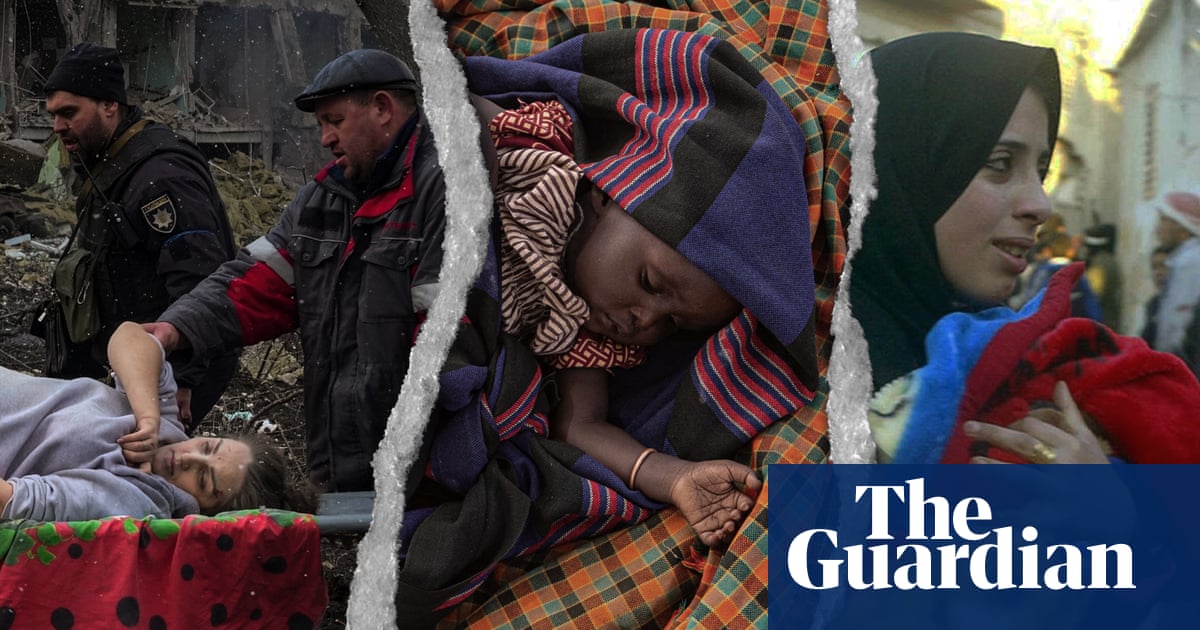
Thirty women were sheltering in the Saudi maternity hospital in El Fasher, Sudan, on 28 October when the massacre began. Some had just given birth and others were still in labour.
Working at the hospital that night, lab technician Abdo-Rabo Ahmed, 28, was one of the few known survivors. “I heard the voices of women and children screaming,” he says. “They were killing everybody inside the hospital. Those of us who were able to run, did.”
In one of the most horrifying incidents of the north African country’s two-year civil war, armed soldiers from the Rapid Support Forces (RSF), which has been fighting the Sudanese army, stormed the hospital, reportedly killing more than 460 patients and their companions.
It was “an unspeakable atrocity”, say rights groups, and one of the worst recent examples of the collapse in protection for the hundreds of millions of civilians trapped in areas of conflict in Ukraine, Gaza, Myanmar, the Democratic Republic of the Congo (DRC) and Sudan.
All major powers are signatories to the Geneva conventions, which commit them to protecting civilians from warring parties, yet in the past year there has been a record number of attacks on healthcare systems. Women going through childbirth are particularly vulnerable due to their need to access locally available services.
A Guardian investigation and data collected by the NGO Insecurity Insight reveal an unprecedented level of violence: nearly 300 attacks on and disruptions to maternity care facilities, staff and pregnant women over the past three years and at least 119 incidents involving direct strikes on hospitals and delivery wards.
Most of these attacks have taken place in Ukraine, Gaza and Sudan, where hundreds of thousands of pregnant women are trapped in war zones.
Women have been killed, prevented from accessing care or forced to give birth in unsafe conditions. The data also shows at least 68 midwives, obstetricians and gynaecologists have been killed, 15 kidnapped and 101 arrested – sometimes while assisting births.
The figures are likely to be an underestimate as they only include incidents that have been reported in local, national and international news outlets and online databases. In some conflict areas, communications and information are sparse.
Last year, it was reported that half of all women who died during pregnancy or childbirth were in a conflict area. Sima Bahous, executive director of UN Women, says: “These are not natural consequences of war. They constitute a pattern of reproductive violence.”
As well as killing women and skilled staff, the attacks are destroying maternal and neonatal care facilities and posing a threat to countries’ ability to repopulate.
In Gaza, a UN commission has cited the impact on the right to reproductive health as one of the reasons for declaring Israel’s actions a genocide.
Even after the October ceasefire, doctors in Gaza say women and children continue to die from inadequate care, due to shortages of medicine and equipment. A UN agency official has said he received reports of women in Gaza giving birth in the rubble beside roads because they could not access a hospital.
“We’ve had rockets and shells fired directly at the wards, operating rooms and maternity wards,” says Dr Adnan Radi, head of the gynecology and obstetrics departments at al-Awda hospital.
A spokesperson for the Israeli military says it does not deliberately target maternity care facilities and does not seek to affect the birthrate of Gaza’s civilian population.
Since the start of 2022, at least 80 maternity and neonatal facilities have been damaged or destroyed in Ukraine. The Guardian has reported from frontline maternity hospitals where births have been forced underground and stress has caused birth complications. In the city of Kherson, in southern Ukraine, the maternity hospital has been damaged five times since the start of the war. “Russia is targeting us deliberately,” the head of obstetrics, Petro Marenkovskyi says.
Russia has denied deliberately targeting civilians.
Olga Butenko, medical director at a perinatal centre in the north-eastern city of Sumy, says: “The reality is that every facility can be under attack now. Air defence tries to protect critical infrastructure, but if the Shahed [drone] is shot down, the debris may fall on a hospital.”
For more than 676 million women who live within 50km (31 miles) of a deadly conflict there are few safeguards, or war crimes prosecutions for those targeting maternity care.
The lack of accountability has created a “culture of impunity”, says Payal Shah, a human rights lawyer at the NGO Physicians for Human Rights. “Attacks on reproductive healthcare, like forced pregnancy and forced sterilisation, can be understood as acts of genocide by preventing births or destroying the survival of a group.”
El Fasher was cut off from humanitarian aid long before the attack on the Saudi maternity hospital, according to the World Health Organization, which says malnutrition is rising sharply, especially among children and pregnant women.
In the DRC, data on attacks has been limited by a lack of information coming out of rebel-occupied areas and unreliable access to the internet. But shelling in the city of Goma in January hit the neonatal ward at Charity maternity hospital, killing mothers, babies and nurses. Nearby facilities were reportedly overwhelmed by casualties, many of them women and children.
In Myanmar, medical facilities have been bombed and dozens of midwives and patients have been arrested, killed or injured over the past two years during the country’s ongoing civil war.
Most maternal deaths are preventable using routine measures, say medical experts, but health systems can collapse during war, dismantling the conditions that make safe childbirth possible. Rights groups say fear is also driving women away from facilities once considered safe, forcing them to take risks, such as giving birth at home without skilled assistance or access to emergency care.
“If maternity hospitals are being deliberately targeted then it speaks to a wider and more disturbing trend: the use of violence against hospitals as a weapon to spread fear and to tear apart the social fabric that holds communities together,” says Maarten Van Der Heijden, a lawyer and researcher at the London School of Hygiene and Tropical Medicine.
“There is no absolute protection for hospitals in war. Under the Geneva conventions, medical facilities can lose their safeguarded status if used for acts deemed ‘harmful to the enemy’, which has now become a standard defence.”
Additional research by Tam Patachako
Quick Guide
Contact us about this story
Show

The best public interest journalism relies on first-hand accounts from people in the know.
If you have something to share on this subject, you can contact us confidentially using the following methods.
Secure Messaging in the Guardian app
The Guardian app has a tool to send tips about stories. Messages are end to end encrypted and concealed within the routine activity that every Guardian mobile app performs. This prevents an observer from knowing that you are communicating with us at all, let alone what is being said.
If you don’t already have the Guardian app, download it (iOS/Android) and go to the menu. Select ‘Secure Messaging’.
SecureDrop, instant messengers, email, telephone and post
If you can safely use the Tor network without being observed or monitored, you can send messages and documents to the Guardian via our SecureDrop platform.
Finally, our guide at theguardian.com/tips lists several ways to contact us securely, and discusses the pros and cons of each.
link