Investigating health literacy and its associations with fear of childbirth in pregnant women: a cross-sectional study
The results of the present study indicated that 29.6% of the pregnant women had limited health literacy, while 70.4% demonstrated adequate health literacy. Another study in northern Iran also reported that 38.9% of pregnant women had limited health literacy16. Similarly, studies from other countries, such as Turkey and Germany, revealed that 56.1% and 33.4% of pregnant women, respectively, had limited health literacy5,17. These variations in health literacy levels across different populations may be attributed to differences in demographic characteristics, methodologies used to measure health literacy, and contextual factors such as cultural, educational, and healthcare system disparities.
The evidence from these studies collectively highlights that around one-third of pregnant women lack adequate health literacy, underscoring the need for a deeper understanding of this critical concept and its associated factors. Addressing this gap is essential for designing targeted interventions to improve health literacy among pregnant women, particularly in populations where limited health literacy is prevalent. Enhancing health literacy can empower women to make informed health decisions, ultimately leading to better maternal and child health outcomes.
The present study revealed that among the demographic variables examined, only family income had a statistically significant association with health literacy. Although higher years of education among women were associated with a greater likelihood of adequate health literacy, and employed women demonstrated higher levels of health literacy compared to homemakers, these differences were not statistically significant. These findings are partially aligned with those of another study conducted in Iran, which reported a significant positive correlation between educational level and health literacy but, similar to our study, found no significant association between employment status and health literacy1. Furthermore, a study by Demo One also highlighted a significant relationship between higher levels of education and income with adequate health literacy18. In line with the findings on income, other studies have consistently shown that women with lower annual incomes tend to have lower levels of health literacy compared to those with higher incomes19,20.
The observed association between income and health literacy underscores the role of socioeconomic factors in shaping individuals’ ability to access, understand, and utilize health information. Higher income levels may provide individuals with greater access to educational resources, healthcare services, and opportunities for health-related learning, thereby enhancing their health literacy. The lack of a significant association between employment status and health literacy in our study, despite the observed trend, may be attributed to the heterogeneity of job types, work environments, and access to health-related information among employed women. Similarly, the non-significant relationship between years of education and health literacy, despite a positive trend, could reflect the influence of other mediating factors, such as the quality of education or the relevance of educational content to health-related topics. These findings collectively emphasize the need for targeted interventions to address socioeconomic disparities in health literacy, particularly among low-income populations.
Given that one of the significant challenges in reproductive health is unplanned pregnancy and its associated consequences, such as induced abortion—which is illegal in some countries—and its adverse outcomes for both mothers and families, the present study demonstrated that women with higher levels of health literacy were more likely to have planned pregnancies. This finding aligns with other studies, which have shown that women with greater health literacy were significantly more likely to utilize preconception counseling and have planned pregnancies. The consistency between these studies and the current research underscores the critical role of health literacy in influencing pregnancy planning, a key aspect preconception counseling, and in improving maternal health outcomes during pregnancy1,17.
The association between higher health literacy and planned pregnancies highlights the importance of empowering women with the knowledge and skills necessary to make informed decisions about their reproductive health. Health literacy enables women to access and understand information about contraception, family planning, and preconception counseling, thereby reducing the likelihood of unplanned pregnancies and their associated risks. These findings emphasize the need for targeted interventions to enhance health literacy among women of reproductive age, particularly in communities where unplanned pregnancies and their consequences are prevalent.
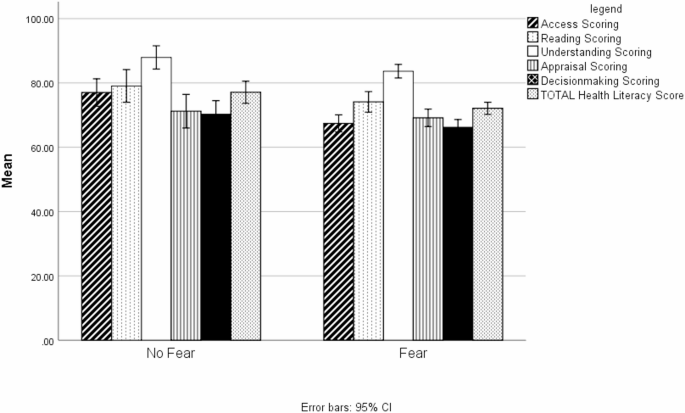
Regarding the prevalence of fear of childbirth, our study aligns with another study conducted in northern Iran, which found that over 70% of pregnant women reported experiencing fear of childbirth21. Given that fear of childbirth is a significant factor influencing the choice of cesarean delivery22, understanding its associated factors is crucial. In the present study, researchers found that overall health literacy score, as well as its two dimensions—access and understanding—were significantly associated with fear of childbirth. An interventional study also demonstrated that a health literacy-based educational program for pregnant women in Turkey led to significant improvements in pregnancy adaptation, general self-efficacy, and a notable reduction in fear of childbirth within the intervention group. This association highlights the importance of health literacy as a protective factor against fear of childbirth23. Although research on the relationship between health literacy and fear of childbirth remains limited, studies such as one conducted in Japan have shown the positive impact of health literacy on reducing anxiety and depression among pregnant women24. Given that fear of childbirth itself is a significant contributor to maternal anxiety8, enhancing health literacy could effectively help alleviate anxiety associated with this fear.
The findings from these studies collectively emphasize the critical role of health literacy in addressing fear of childbirth. Health literacy may equip women with the knowledge and skills necessary to understand the childbirth process, access reliable information, and make informed decisions, thereby reducing uncertainty and fear.
Following the multivariable logistic regression analysis, health literacy emerged as a statistically significant factor associated with the fear of childbirth. Higher health literacy may enable women to better navigate the complexities of pregnancy and childbirth, thereby reducing anxiety and fear related to the delivery process. In addition to health literacy, our analysis revealed a significant relationship between family income and planned pregnancies with fear of childbirth. These findings are consistent with previous studies that have also emphasized the correlation between family income and childbirth-related fear25,26,27. It appears that socio-economic factors, including financial stability, may influence women’s perceptions and emotional responses to childbirth, which could, in turn, affect their overall experience and fear of childbirth during this critical life event.
Given that income was significantly associated with both variables (health literacy and fear of childbirth), it is plausible that income acts as a mediator. Future studies should explore these potential pathways through formal mediation or moderation analyses to better understand how socioeconomic disparities contribute to variations in health literacy and childbirth-related fear.
In summary, our findings reinforce the importance of health literacy and socio-economic factors in understanding fear of childbirth. Addressing these issues could be crucial in developing targeted interventions to support expectant mothers in managing their fears and improving their overall childbirth experiences.
The implications of these findings are profound. They highlight the need for targeted educational interventions aimed at enhancing health literacy among expectant mothers. Furthermore, understanding the socio-economic context, including the influence of family income and the planning status of pregnancies, can inform healthcare providers and policymakers in addressing the psychological aspects of childbirth. Ultimately, fostering an environment that supports health education and economic stability may contribute to alleviating fear and improving maternal outcomes during childbirth.
Limitations of the study
This study has limitations that should be recognized. Firstly, the cross-sectional design limits the ability to establish causal relationships between the variables examined. Secondly, the sample size, although adequate for preliminary analysis, might not fully represent the broader population; future studies should aim to include a larger and more diverse sample to enhance the generalizability of the findings. Additionally, the questionnaire used to assess fear of childbirth did not classify the intensity of fear experienced by participants, which may limit the depth of understanding regarding the varying degrees of fear present.
link